Journal
From SaaS to RaaS: The Shift from Selling Seats to Selling Outcomes
Sep 27, 2026 · Donoghteh
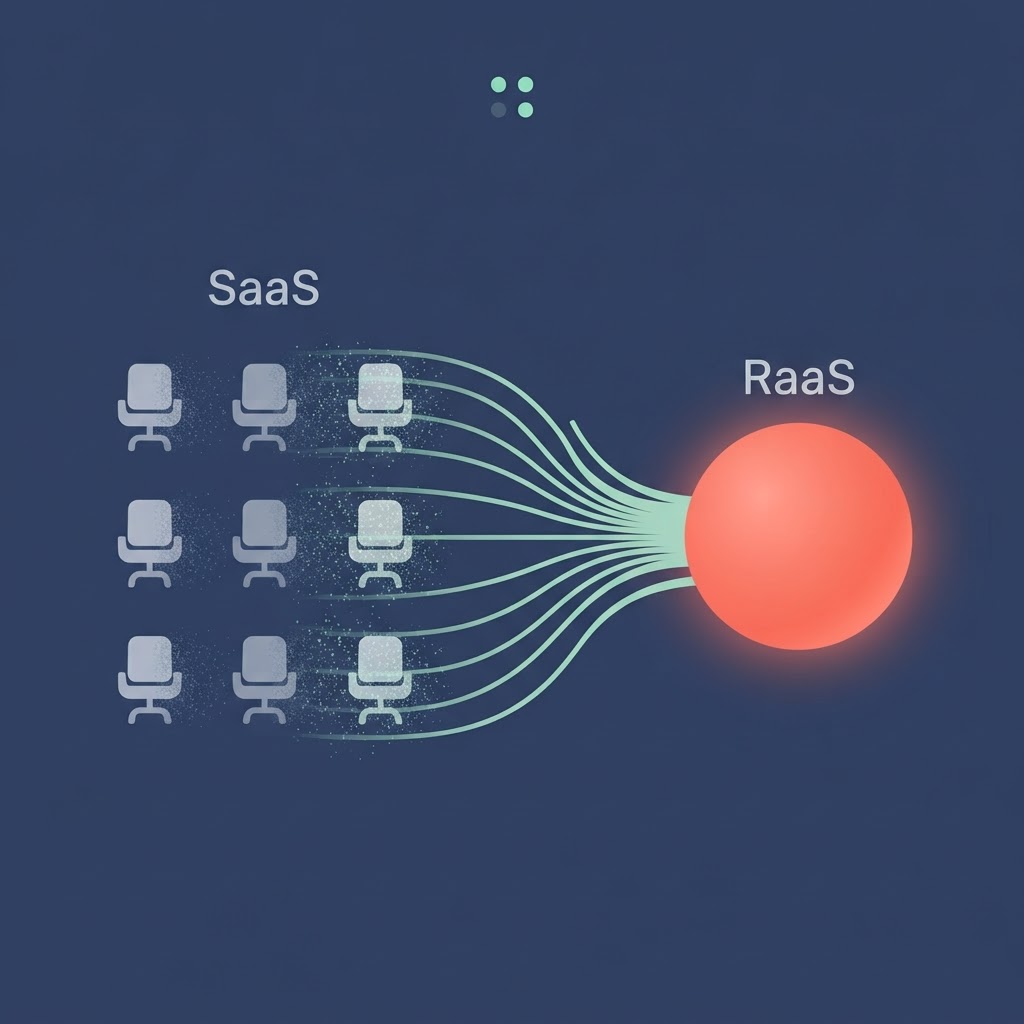
AI agents are dissolving the seat-based economics of SaaS. The next software paradigm prices and delivers measurable outcomes. Here is what RaaS means for builders, buyers, and investors.
For twenty-five years, the business model of software has been remarkably stable: bundle a capability, charge per seat, bill monthly, and grow by adding users. SaaS turned software from a product you own into a service you rent. It built trillion-dollar companies on a simple premise — that the value of software is proportional to the number of humans sitting in front of it.
That premise is quietly dissolving. When AI agents, not people, perform most of the work a tool used to support, the seat stops being the natural unit of value. What replaces it is the outcome. This is the shift from SaaS to RaaS — Results-as-a-Service — and it is less a new product category than a new economic contract between software vendors and the businesses they serve.
What RaaS Actually Means
Results-as-a-Service describes software that is priced, and often delivered, against a measurable outcome rather than a subscription. The vendor does not sell access to a platform; it sells resolved support tickets, qualified sales pipeline, recovered revenue, processed claims, or booked appointments. The customer pays when the result lands — or pays in proportion to how much of it lands.
The distinction sounds subtle but it is structural. In SaaS, the vendor's incentive ends at the login screen: deliver the tool, and usage is the customer's problem. In RaaS, the vendor carries responsibility for the work itself. Risk moves across the table. Alignment becomes automatic, because the vendor only wins when the customer does.
Why AI Is the Forcing Function
This shift is not happening because software vendors woke up generous. It is happening because AI collapsed the distance between the tool and the result.
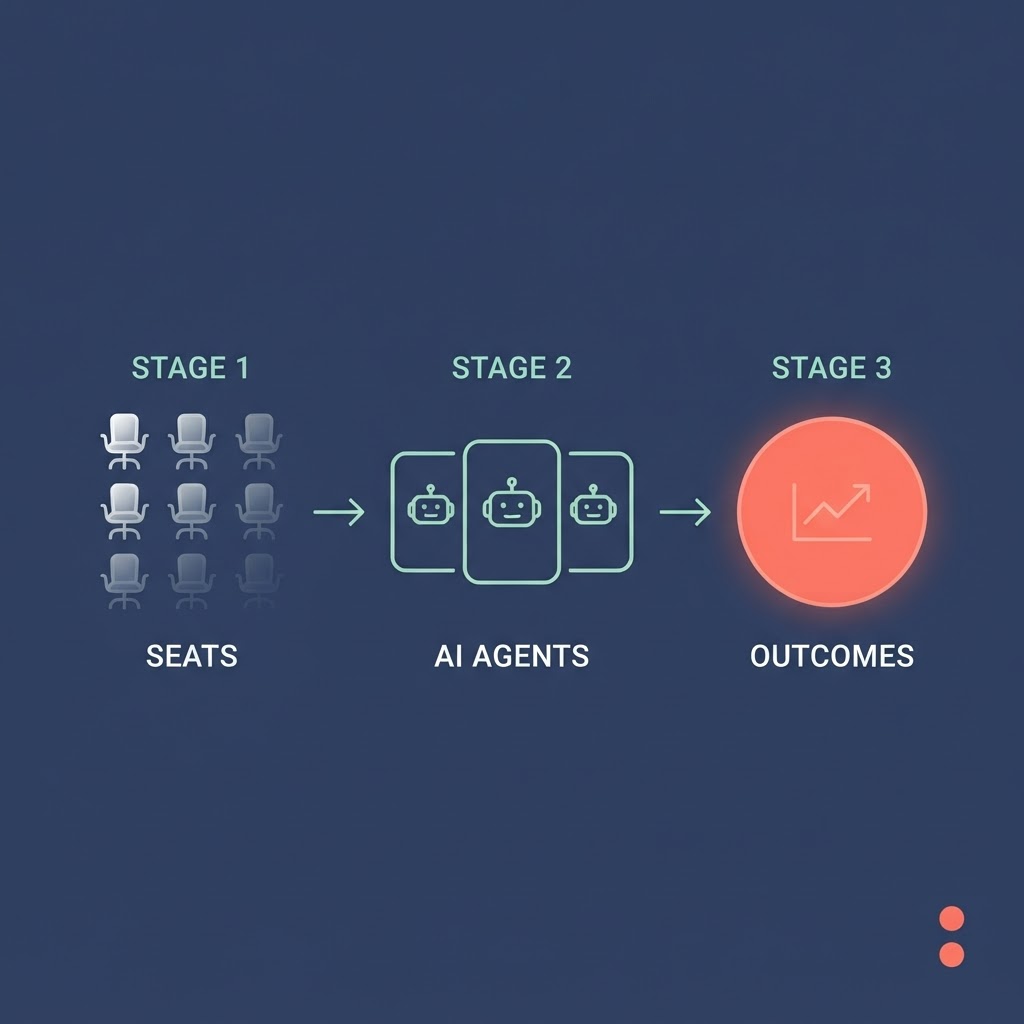
An agent can now read the support queue, resolve the ticket, draft the campaign, reconcile the invoice, and book the meeting — end to end, without a human driving the interface. When software performs labor rather than merely assisting it, three things break at once:
Seat count stops mapping to value, because a handful of supervisors can direct a fleet of agents that does the work of a department.
Usage stops being a proxy for value, because the customer no longer cares how many agent runs a task consumed — only that the task got done.
Fixed pricing starts leaking margin, because the vendor's compute costs now scale with actual work performed, not with the number of logins.
Pricing on outcomes is the only model that resolves all three pressures at once.
The Economics of Selling Results
RaaS changes the shape of a software business in predictable ways.
Revenue becomes more volatile but more defensible. A customer who buys outcomes has no reason to churn to a cheaper tool, because switching means rebuilding trust in an unproven result engine. Measured outcomes accumulate into proprietary performance data — which agents resolved which tickets, at what rate, at what cost — and that data becomes a moat no competitor can copy.
Margins demand discipline. Because the vendor absorbs variable compute costs and the risk of underperformance, the unit economics must be engineered, not assumed. The teams that win will be the ones that know their cost per outcome to the cent, and price a margin on top of it.
Sales cycles compress. Nobody needs a proof of concept to believe in software that guarantees results — the pilot is the pitch. The flip side is that procurement has to learn to buy outcomes, and legal teams have to learn to write contracts around them.
What Has to Be True
RaaS is not a relabeling exercise. It only works when three conditions hold:
The outcome must be measurable and attributable. If the result cannot be counted, it cannot be priced. Vendors and buyers will need shared definitions of a qualified lead or a resolved ticket — and increasingly, shared measurement infrastructure to verify them.
The vendor must have enough process control to influence the result. Selling outcomes into a process the software only touches at the edges is a way to absorb other people's failures.
The incentive gradient must stay honest. If the vendor is paid per ticket closed, expect tickets to close badly. Outcome design is product design.
None of these are reasons the shift will not happen. They are the reasons it will be uneven — spreading first through functions where outcomes are crisp, digital, and data-rich: customer operations, revenue, compliance, back-office processing.
What It Means for Investors and Venture Builders
At Donoghteh, we build and evaluate companies at exactly this kind of inflection, and RaaS changes the diligence checklist in a few concrete ways.
The metrics migrate from adoption to delivery: cost per outcome, outcome quality, verification rate, outcome gross margin. A RaaS-native company can be smaller in headcount and larger in revenue per employee than its SaaS predecessor, because agents do the delivery work.
The moat question migrates from product to performance data. The durable asset is not the interface but the compounding record of what works — the outcome graph.
And the classic churn risk inverts. SaaS churns when a tool fails to justify its seats. RaaS churns only when a competitor can prove a better outcome, which is a far higher bar.
The Takeaway
Every platform shift rewrites the pricing model of the era before it. The PC sold licenses, the cloud sold subscriptions, and the agent economy will sell results. SaaS will not disappear — it will do what on-premise software did: persist, commoditize, and defend the segments where outcomes resist measurement.
But the center of gravity is moving. The software companies that define the next decade will not ask how many users they can sign up. They will ask what result they can guarantee, what it costs them to deliver, and how their proof gets better every day.
Seats were a proxy. Outcomes are the thing itself. That is the whole shift.